
Understanding PHP Fibers and Coroutines
PHP 8.1 introduced Fibers for coroutines and cooperative concurrency. Learn what PHP Fibers are, how they work, and when to use them.
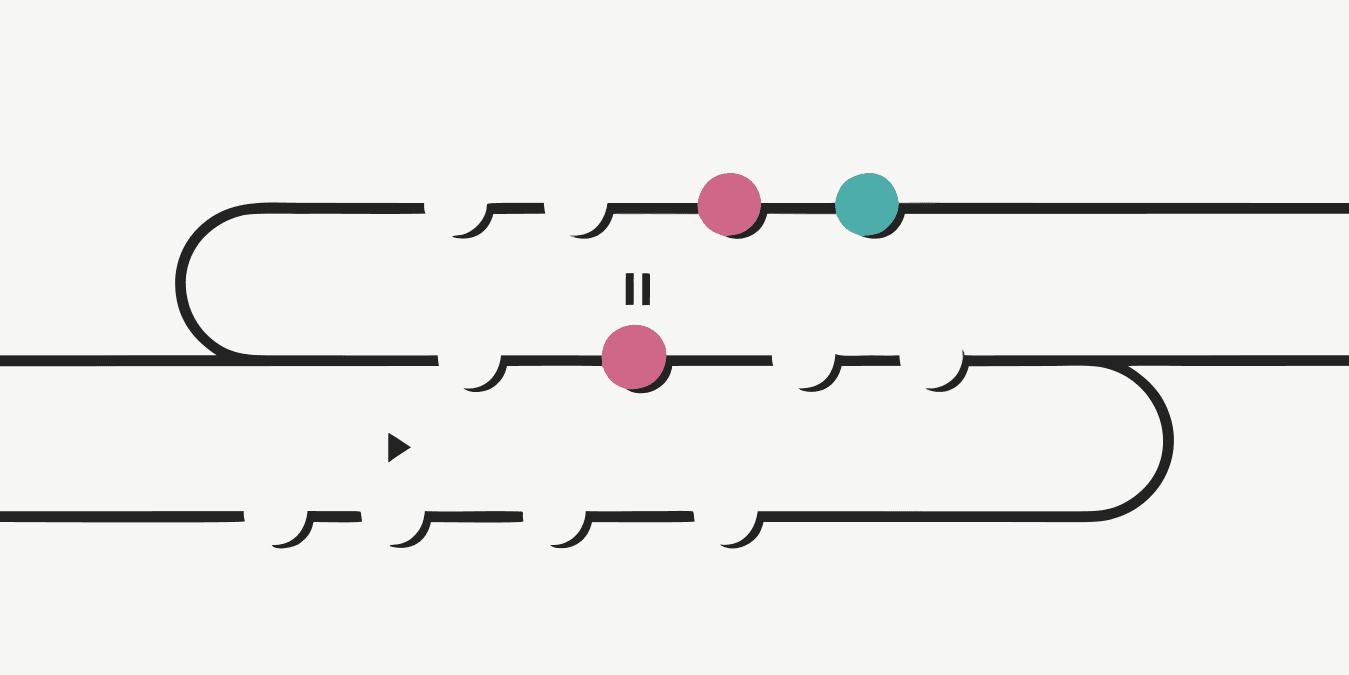
PHP has a reputation for being strictly "one thing at a time": a request comes in, your code runs top to bottom, and while it waits for the database or an HTTP call, it just... waits. PHP 8.1 quietly added a feature that changes what's possible here: PHP Fibers. They are the foundation for coroutines and cooperative concurrency in PHP.
Fibers are a low-level tool, and most developers will use them through a library rather than directly. But understanding what they are makes a lot of modern async PHP click into place.
Table of contents
- Blocking vs non-blocking, quickly
- What a PHP Fiber actually is
- A tiny Fiber example
- Fibers vs threads vs async
- When you actually need this
Blocking vs non-blocking, quickly
When your code calls a database or an external API, most of the time is spent waiting for the answer. In normal PHP, that wait is "blocking": nothing else can happen on that process until the answer arrives.
If you need to make ten independent API calls, blocking code does them one after another — ten waits in a row. What if the process could start the next call while waiting for the first? That's the problem concurrency solves.
What a PHP Fiber actually is
A Fiber is a block of code that can pause itself and hand control back to the caller, then resume later exactly where it left off. That's the whole idea.
Think of reading a book with a bookmark. You can stop at any page, go do something else, and later open back to the exact page and continue. A Fiber is that bookmark for running code.
Crucially, this is cooperative: the Fiber decides when to pause (it "yields"). Nothing interrupts it by force. That makes the behavior predictable and avoids many of the classic pitfalls of threads.
A tiny Fiber example
$fiber = new Fiber(function (): void {
    echo "start\n";
    $value = Fiber::suspend('paused here');  // hand control back
    echo "resumed with: $value\n";
});

$signal = $fiber->start();      // prints "start", returns 'paused here'
echo "fiber said: $signal\n";

$fiber->resume('hello again');  // prints "resumed with: hello again"
Running this prints:
start
fiber said: paused here
resumed with: hello again
Notice how execution jumped out of the fiber at suspend, ran the outer code, then jumped back in at resume. That pause-and-resume ability is everything you need to build cooperative concurrency.
Fibers vs threads vs async
It helps to compare three ideas people often confuse:
- Threads run code truly in parallel, and the operating system can interrupt them at any moment. Powerful, but you must guard shared data carefully.
- Fibers run one at a time and only switch when the code chooses to. No surprise interruptions, so far fewer concurrency bugs.
- Async/await in other languages is usually built on top of a Fiber-like mechanism plus an event loop.
So a Fiber is not parallelism. It's a way to interleave waiting tasks efficiently on a single thread.
When you actually need this
Be honest: for a typical request-response web app, you probably don't use Fibers directly. Your framework and the classic model work great.
Fibers shine when you have lots of I/O waiting at once — many concurrent API calls, a long-lived server handling many connections, or real-time features. In those cases you'll usually reach for a library (like an async runtime) that uses Fibers under the hood, so you write simple-looking code that runs concurrently. If long-lived processes interest you, see how FrankenPHP worker mode keeps your app booted between requests.
Conclusion
PHP Fibers gave the language a proper, built-in way to pause and resume code — the missing piece for real cooperative concurrency. You may never call Fiber::suspend yourself, but knowing what it does demystifies every async PHP library you'll meet. Start by recognizing where your code spends its time waiting; that's where this idea pays off.
Resources
- PHP manual: the Fiber class
- ReactPHP and AMPHP (async runtimes that build on Fibers)